Build Your Own Open Source Cloud Business
You have an idea for a useful software product. You want to publish the source, let people run it themselves for free and build a business that pays for its continued development. What would you charge for?
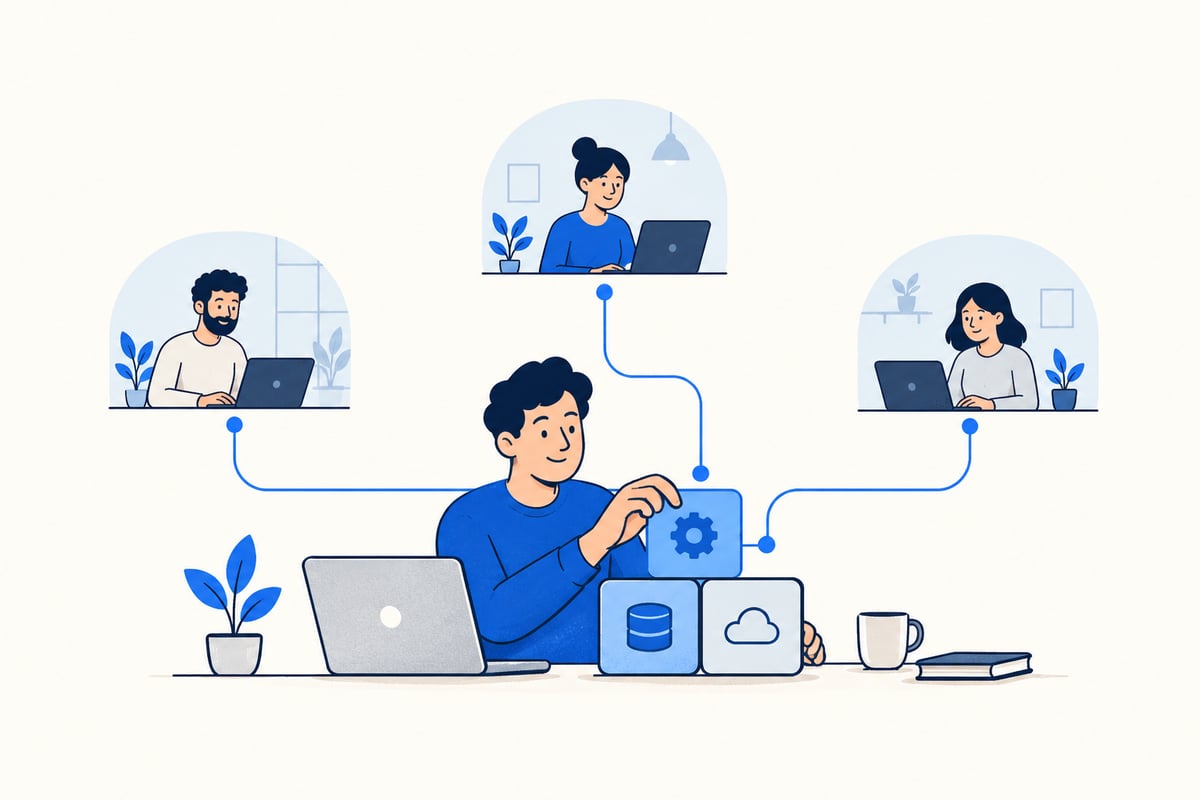
Build your own open-source product. Offer free self-hosting. Charge for a managed cloud option. Customers choose whether to operate the software themselves or pay you to handle that work.
WordPress made that choice familiar long before AI-assisted coding. Products such as Quackback and Dittofeed show it happening today. For solo founders, AI-assisted development can make building an original product around this business model more practical.
WordPress showed the model years ago
The distinction between WordPress.org and WordPress.com is a longstanding example. You can download the WordPress software, arrange hosting and manage the installation yourself. Or you can use WordPress.com, which includes managed hosting and offers paid plans.
The software being available for free doesn't remove the work of running it. Someone still needs to handle hosting, updates, backups and the occasional problem that arrives at an inconvenient time.
That creates two useful choices for different customers. One values control and is comfortable managing the software. Another wants a working website and would rather pay someone to handle the infrastructure.
For your own product, the lesson is straightforward: free access to the software can coexist with a paid service that makes using it easier. Your cloud offering gives customers a convenient way to use what you've built, while self-hosting remains a meaningful option.
Quackback and Dittofeed show it happening today
Quackback combines customer feedback and support tools. It offers an open-source self-hosted edition alongside cloud plans. Its pricing page makes the operating responsibility explicit: self-hosters run the servers, backups and upgrades, and connect their own AI provider.
Dittofeed applies the model to customer messaging automation. It offers free self-hosting and a paid cloud option where Dittofeed handles hosting. It also sells support and enterprise offerings.
Both illustrate a product business with a choice about how customers run the software. The teams develop a product, make self-hosting available and sell managed services around their own work.
These examples establish that the model exists. They don't tell us whether a particular new product will succeed, and they aren't evidence that either product was built by one person or with AI.
The useful question for a solo founder is: what original product could you build for a specific audience, with the same choice between self-hosted and managed use?
AI-assisted coding makes the building side more approachable
A solo founder has to cover a lot of ground: product design, implementation, testing, documentation and deployment. AI-assisted coding can help you draft code, explore approaches, write tests and work through unfamiliar parts of an implementation.
That can make it more practical to build a focused first version of your own product. You can spend more time understanding a customer's workflow and less time starting every piece from a blank file.
For a hypothetical example, Shipnote could be an original release-notes tool for small SaaS teams. Its founder could use AI assistance to build an editor, a public changelog and subscriber notifications, then publish the product as open source and offer a hosted version.
The repeatable idea is the business model: original software, free self-hosting and paid convenience. Your product still needs its own audience, purpose and reason to exist.
You also remain responsible for reviewing the code, protecting customer data and operating the service. A faster first version helps you reach customer conversations sooner. It doesn't establish demand or make production maintenance disappear.
Give self-hosters a useful product
If self-hosting is part of your offer, make it something people can realistically use. Publish installation instructions, explain configuration and document how to update, back up and restore the application.
Be clear about what is free. The self-hosted software can be free while the user still pays for their server, storage, email delivery or other services it needs.
Define the support boundary too. For example, you might offer public documentation and community issue discussions for self-hosters, with direct operational support included in the paid cloud plan.
People may self-host because they want control, have particular infrastructure needs or enjoy operating their own tools. They can remain valuable users even if they never become cloud customers. Their feedback may help you improve the product, and some may choose to contribute fixes or documentation.
Treat those possibilities as benefits you earn through a useful project. Publishing a repository doesn't automatically create a community.
Make the cloud option worth paying for
Your paid offer should answer a simple question: what work does the customer avoid by choosing your cloud service?
For a small product, that might include:
- Creating an account and getting started without a server setup.
- Managed updates and database maintenance.
- Backups with a tested recovery process.
- Monitoring and help when something goes wrong.
- A clear way to export data or move to self-hosting.
Choose what you can reliably deliver and describe it plainly. A solo founder promising round-the-clock personal support is creating a very different job from one offering support during stated business hours.
Price the service to cover infrastructure, usage, payment fees, support and ongoing product development. Shared infrastructure may spread some costs across customers, but a demanding account can still create significant work.
Charge for an operating commitment you can sustain. Track the time spent supporting early customers as carefully as the hosting bill.
Start with one buyer and one recurring job
The business model doesn't choose your market for you. Before building a broad platform, name one group of people and one job your product will help them finish.
For the hypothetical Shipnote example, that could be small SaaS teams that want to publish release notes and notify subscribers from one place. A first version could focus on writing an update, publishing it and delivering the notification.
Speak with prospective users about how they do that today. Ask what takes time, what breaks and whether they would prefer to self-host or use a managed service.
That last question matters. Enthusiasm for an open-source repository and willingness to pay for cloud hosting are different signals. You need to understand both audiences, especially the people whose subscriptions will fund your work.
To find those conversations, use our guide to choosing your next launch channel. Start where your intended buyer already discusses the problem and follow the community's rules.
This week: test both sides of the offer
Write a short proposal for your own product before expanding the feature list:
- The product: "We're building [product] to help [specific buyer] do [recurring job]."
- The self-hosted option: "Run the open-source version on your own infrastructure for free. You handle [operating responsibilities]."
- The managed option: "Pay a subscription and we handle [specific setup and ongoing work]."
Take it to five potential users. Ask which option they would choose, why and what they would need to see before trying it.
Then build the smallest useful workflow with AI assistance, review it carefully and invite a few people to use it. Track successful self-hosted installations separately from paid cloud signups. Your next development decision should reflect what those users actually need and what you can sustainably operate.